Judgement
這則牌義仍是英文。翻譯稿還沒放進來。
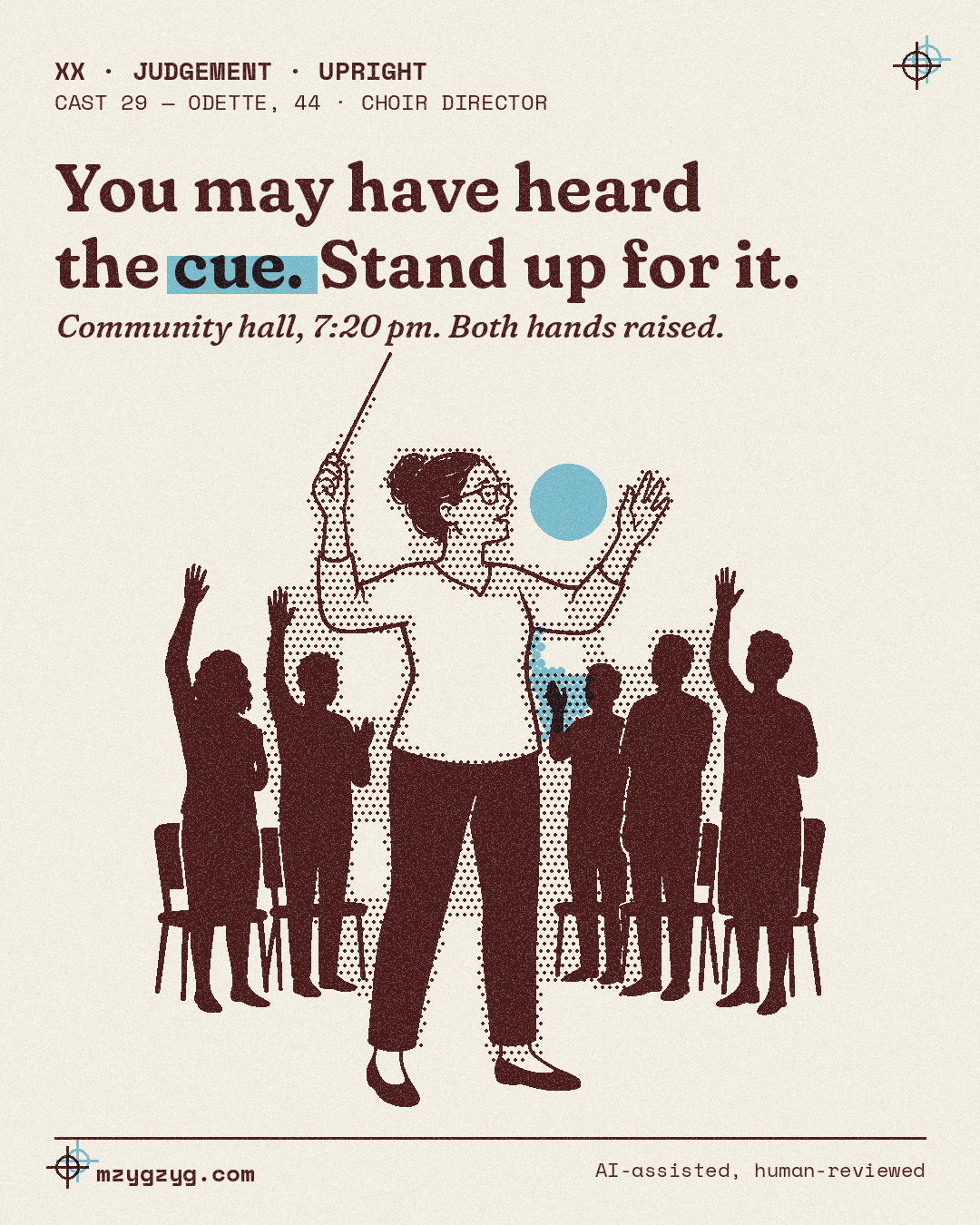
正位
A conductor lifts both hands and the room stands. The card often points to a clear cue to review, rise and choose again. Tradition reads Judgement as awakening, reckoning and a call that's hard to unhear. It's less about being judged than about judging fairly: looking back honestly, keeping what's true, updating the rest. You're allowed to change. The card asks what you'd stand up for now.
You may have heard the cue. Stand up for it.
走向
- 工作: Leans toward a calling, or a clear yes-or-no moment.
- 感情: Leans toward an honest review of what's working.
- 自己: A reminder that you can update who you are.
眼前
Notice if a nudge to decide is already here.
一小步: Write, in three lines, the version of you you'd stand up for.
逆位
The cue came and you may have stayed seated. Reversed, it may point to judging yourself too hard to move. Old verdicts keep playing: the mistake, the version of you from years ago. The harshest critic in the room may be you. The card doesn't wave the past away. It asks you to keep what it taught and let it stop running the show. A second take is allowed.
You're allowed a second take. Ask for it.
走向
- 工作: Notice if a cue you missed is still worth answering.
- 感情: Notice old verdicts you're still serving.
- 自己: A reminder that the harshest critic in the room may be you.
眼前
Notice whether forgiving one mistake makes the next step easier.
一小步: Write down one old mistake and one thing it taught you.
故事
正位
A cue you cannot unhear: the project, the apology, the version of you that is ready to stand. The room is already rising. You are still deciding whether to join. Second chances rarely send calendar invites. Standing up can be as small as sending the note you already drafted.
Judgement is a wake-up call, review, and a second chance you answer on purpose: awakening and reckoning that is less about being judged than about judging fairly. Look back honest. Update who you are. Rise for the call that matches your values. This is not karma theater and not a court verdict. A clear yes-or-no moment at work can be the lean without grand staging.
Name the cue in one sentence. Take one standing-up action: send the note, start the review, or say the clear yes or no you have been half-holding. Let your body match what you already heard.
What cue have you already heard that still needs your body to stand?
逆位
The cue came. You stayed seated. Old verdicts are still playing: the mistake, the younger version of you. The harshest critic in the room may be wearing your face. Delay is wearing a judge's robe. The second take is allowed even if the first take still echoes. You do not owe the old verdict a lifetime lease.
Reversed Judgement may point to harsh self-judgement, ignoring a cue, delay, or living under old verdicts. Review is still on the table; the tilt is paralysis by self-critique. You are allowed a second take. Keep what the past taught. Stop serving a sentence you already finished. A cue you missed can still be worth answering without theatrics.
Write the old verdict in one line, then write a second take beside it. Ask one trusted person, or yourself, for permission to use the second take today. Stand for the rewrite.
Which old verdict are you still obeying?