The Devil
Este significado ainda está em inglês. O pacote traduzido ainda não entrou.
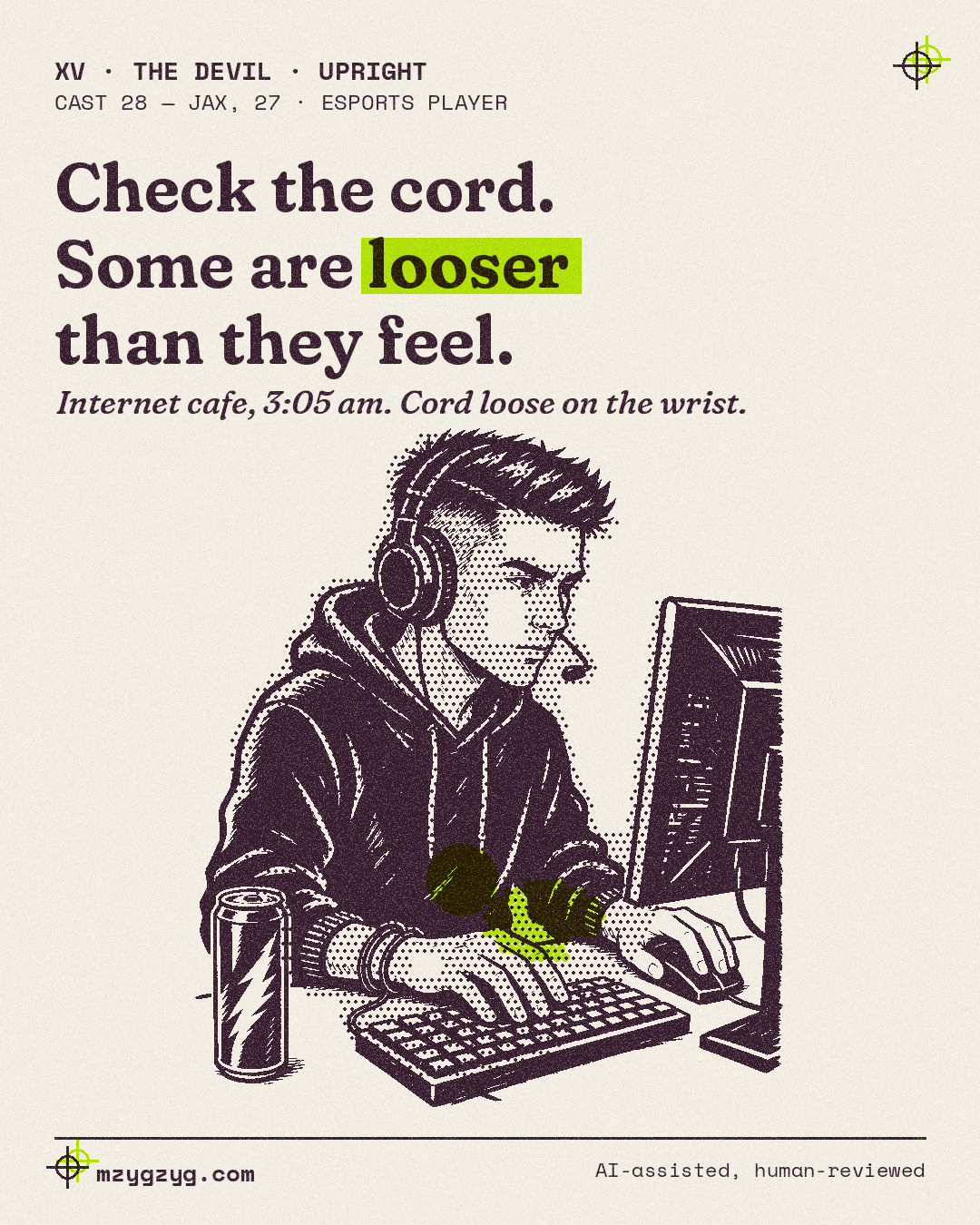
De pé
A headset cord wrapped around the wrist, loose enough to slip off. The card often points to a habit or pull that may feel stronger than it is. Tradition reads the Devil as attachment, temptation and patterns that keep you in place. No shame in it. Most people have a loop that pays off enough to keep going. The card asks you to look at the cord closely. Some of what holds you may be looser than it feels.
Check the cord. Some are looser than they feel.
Desfechos
- Trabalho: Notice if a reward loop keeps you busy but not moving.
- Afeto: Notice if a pull feels intense. Check whether it feels good, or more familiar than good.
- Você: A reminder that some chains are looser than they feel.
Horizonte
Notice when the pull shows up today.
Um passo pequeno: Move one 'five more minutes' app off your home screen.
Invertida
The cord is off the wrist, still on the desk. Reversed, it may point to loosening a habit, or seeing a pattern clearly for once. Noticing is real progress, even if the pull comes back, and it often does. That's normal, not failure. The card asks you to count the small break and plan for the next tempting moment. If a habit feels out of your hands, reaching out for support is a strong move.
You noticed the cord. That counts.
Desfechos
- Trabalho: Leans toward stepping back from a draining dynamic.
- Afeto: Leans toward naming what you won't keep doing.
- Você: A reminder to count the small break as a win.
Horizonte
Notice whether loosening one grip brings any relief.
Um passo pequeno: Write the habit you're loosening and what you'll do instead tonight.
História
De pé
It is late. The headset cord is looped around your wrist while you tell yourself one more round. The loop pays you something in the short term. In the long term it keeps you in the chair. Familiar can masquerade as necessary.
The Devil points to attachment, habits, temptation, and feeling stuck: patterns that keep you in place. No shame in it. Most people have a loop that pays in the short run. Check whether the pull feels good, or mostly familiar. Some binds feel tighter than they are. This is not a clinical label and not a claim that names you as addicted. Reward loops at work can keep you busy without moving you.
When the pull shows up, pause for sixty seconds and name what the loop is buying you. Then choose one smaller pause for tonight: a timer, a walk to the door, or logging off one app. Count noticing as progress.
What does this loop pay you in the short term?
Invertida
You slipped the cord off once recently and felt the air on your wrist. The pull came back later. Noticing still counted. The cord is on the desk, not erased from the room. Awareness arrived before perfect freedom. Practice beats purity here. One repeated pause outweighs a dramatic forever promise.
Reversed Devil may point to release, awareness, or detaching from a draining pattern. Noticing is real progress even when the pull returns, and it often does. That is common, not failure. Count the small break. Name what you refuse to keep doing. If coercion, abuse, or a habit that scares you shows up, step toward real-world help rather than a card. Stepping back from a draining dynamic can start as a named boundary.
Mark the last small break as a win on paper. Plan one repeatable pause for the next time the pull arrives. Treat the pause as practice, not as a final exam.
What small release have you already practiced that deserves credit?